The shot off the back glass (the Spanish “salida de pared”) is the one that defines padel. The ball passes you, bounces, comes off the glass and you wait for it to return it. In tennis that point would be lost; in padel, it is an opportunity.
The key: reading the rebound
Before you hit, you need to know where the ball will come out:
- Fast, low ball: it comes out far from the glass. Do not get too close.
- High, slow ball (a lob bouncing at the back): it comes out close to the glass and high. You can attack.
- Sliced ball: it comes out low and hugging the glass. The hardest.
Technique, step by step
- Turn side-on as soon as you see the ball will reach the glass.
- Move back with the ball, without turning your back on it.
- Leave room: do not stick to the wall. The ball has to come out and reach you.
- Go with the ball with a step forward as it comes off the glass.
- Hit it in front of your body, at waist height if you can.
Forehand and backhand
- Forehand: the most natural. Turn your body, let the ball pass and hit it forward.
- Backhand: the hardest. Turn your shoulders earlier, because you have less time to correct.
Corners: two walls
If the ball hits the back glass and then the side (or the other way round), it changes direction. Wait for it to come off both walls before you move towards it.
What to do next
- Comfortable ball: attack with a drive to the opponent’s feet or down the middle.
- Awkward ball: play a lob and win back the net.
- Out of reach: last resort, the contrapared.
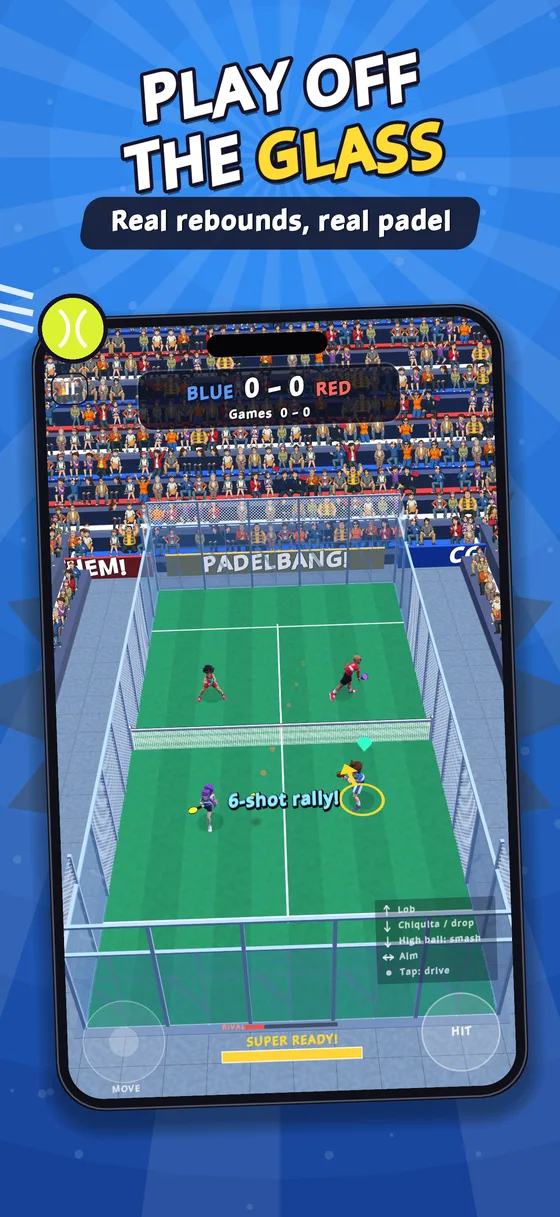
In Padelbang
Playing off the glass is Padelbang’s big thing: the ball comes off the glass with real physics. Wait for the rebound and swipe where you want to send it. The game recognises you played it off the wall and celebrates it.